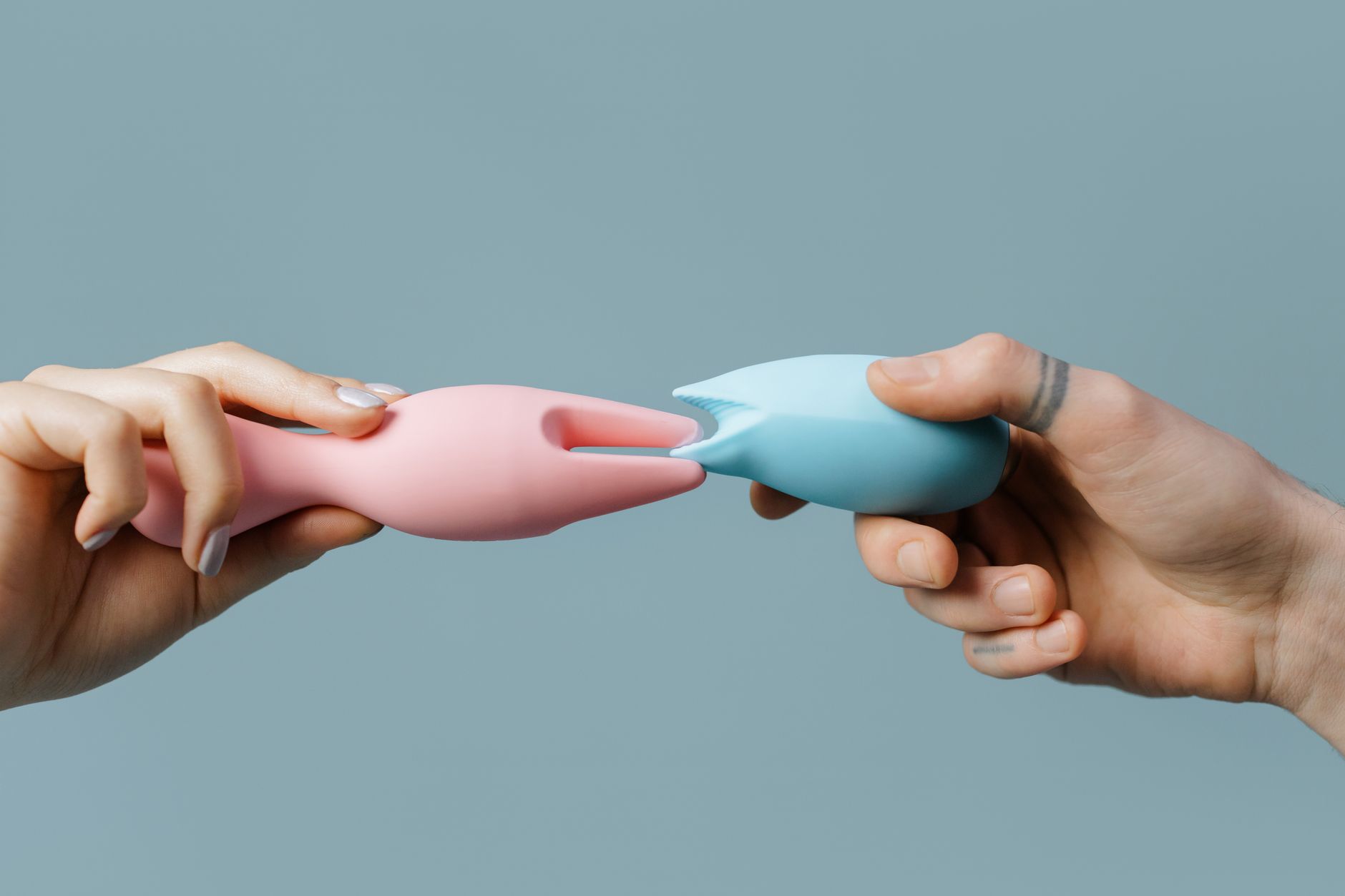
When intimacy goes quiet, saying it out loud is the hardest part
Honestly, couples who've stopped having sex for years rarely ask me how to fix it. They ask me how to survive the guilt. The resentment. The weird half-truth that builds between partners where neither person says "I want this back" because saying it feels like blame.
Here's the thing though. Restarting intimacy after a long gap isn't about proving something or performing for your partner. It's about rebuilding the specific kind of trust that exists only in vulnerability. And that's where lemon vibrators, specifically their design and how couples use them together, can actually change the conversation.
Why lemon vibrators work for reconnecting couples (it's not what you think)
When partners have been disconnected, the biggest barrier isn't desire. It's safety. One person doesn't know if their body is still wanted. The other doesn't know if touching will be rejected. Traditional partnered sex often requires both people to be confident at once, which almost never happens after a gap.
Lemon vibrators like the Lem change this math. Here's why.
First, they're not about penetration or performance. The lemon clitoral vibrator targets external pleasure only, which means there's no staging, no buildup to "real" sex, no invisible checkpoint where one person might freeze. It's honest and low-stakes.
Second, a lemon sucker's suction design creates a totally different sensation than a partner's mouth or hands ever could. This matters because it means your body isn't making a comparison to what used to work. You're not thinking "this is different from what I remember." You're thinking "oh, that's new," which is psychologically different. Novelty resets the nervous system.
Third, and this is clinical: clitoral vibrators give you back autonomy during partnered touch. If you use the Lem together, your partner can be present and connected while you maintain absolute control over intensity, rhythm, and when to stop. That control is what rebuilds trust.
The four-step framework for restarting together
Step 1. Have the conversation outside the bedroom.
Do not bring up sex while you're in bed or tipsy or emotional. Find a neutral time, maybe a walk or a car ride, and say the actual words. "I want us to be intimate again. I'm nervous. Will you be patient?" That's it. You're not problem-solving yet. You're just naming the thing.
Your partner's job is to say yes or to name their own anxiety. If they say "I don't know if I want this," that's information you need. The goal is to know you're both moving toward reconnection, even if the timeline is slower than you want.
Step 2. Introduce touch without sex language.
Before you ever pull out the Lem vibrator, spend a few days just touching each other in non-genital ways. Hold hands. Massage shoulders. Take a bath together. You're rewiring the association between touch and pressure. Most couples who've been disconnected think "touch" means "sex is coming," which triggers anxiety in one or both people. You're breaking that link.
This phase takes at least a few days. Don't rush it.
Step 3. Use a lemon vibrator for solo exploration first.
Before partnered play, use your clitoral vibrator alone. Get to know how the Lem's suction feels, what intensity level doesn't overwhelm you, when you're most responsive. This isn't selfish. This is essential data. You need to know your own pleasure baseline before inviting your partner into it.
Many people skip this because it feels less efficient. Don't. Fifteen minutes alone with the Lem will tell you more about what's going to work between you two than a conversation ever could.
Step 4. Introduce the vibrator as a guest, not a replacement.
When you're ready, invite your partner into the room while you use the lemon clitoral vibrator. You're not asking them to do anything yet. They're just present. They might touch your arm or your shoulder. They might kiss you. The Lem is doing the work, and your partner is witnessing your pleasure. This matters psychologically. It says "I trust you to see me at my most vulnerable." It says "this is for us, not instead of you."
After the first time, check in without analyzing. "That felt good." "I want to do that again." "What did that feel like for you?" You're not grading the experience. You're noticing what worked.
The mistakes couples make when they restart
Mistake 1: Treating the vibrator as a problem to solve.
If your partner worries that the lemon sucker means they're not enough, that's worth addressing. But here's the truth. The Lem vibrator doesn't replace your partner's touch. It does something different. The human body is weird. You can receive pleasure from a toy and connection from your partner at the same time. These aren't competing. They're layered.
Mistake 2: Rushing to partnered penetration.
After using a clitoral vibrator together, there's this weird pressure to "graduate" to intercourse, like the toy was just a stepping stone. It's not. Some couples use the Lem as their primary pleasure practice indefinitely. That's not failure. That's knowing what works.
Mistake 3: Assuming one orgasm means you're fixed.
One good experience after years of disconnection doesn't mean the path is smooth from here. You're rebuilding a practice, not having a one-time fix. Expect some sessions to feel awkward. Expect yourselves to need to pause or reset. This is normal. It's also why communication matters more than the vibrator ever could.
When lemon vibrators uncover real problems
Sometimes couples restart physical intimacy and realize the gap was actually about something else. Resentment. Misaligned values. One person trying harder than the other. The vibrator doesn't fix that. But it does bring the real issue to the surface faster.
If you start using the Lem together and one person consistently shuts down, that's not a vibrator problem. That's a relationship problem that deserves its own conversation or professional support. A couple's therapist who understands pleasure and sexuality (the Gottman Method framework includes this) can help you untangle whether the block is fear, resentment, or something else.
Lemon vibrators work best in relationships where both people want to reconnect but need permission to be awkward about it first.
The permission part (maybe the most important)
After a long gap, restarting sex feels like it requires both people to be instantly confident. You need permission to be nervous. You need permission to say "I'm not ready yet." You need permission to try something and hate it and never try it again. Lemon clitoral vibrators give you a low-stakes way to practice all of this. They give you practice in vulnerability without the full exposure of traditional partnered sex.
That's not a shortcut. That's scaffolding. And if you're reconnecting after years apart, scaffolding is exactly what you need.
If you're ready to start having this conversation with your partner, that takes courage. The physical part, once you get there, is often the easy part. Want to talk through what reconnection looks like for your specific situation? Reach out to us.
People also ask
How long does it take to rebuild intimacy after years of disconnection?
There's no standard timeline because it depends on what caused the gap in the first place. If it was situational (travel, caregiving, health crisis), reconnection might happen over weeks or months once the external pressure lifts. If it was relational (unresolved conflict, trust breach), rebuilding takes longer and usually benefits from professional support. Most couples I work with see meaningful shifts within 6 to 8 weeks of consistent practice, but "meaningful" might mean confidence to try, not daily intimacy. Go slow.
Can using a lemon vibrator together hurt a relationship if my partner feels insecure?
Yes, if you introduce it without context. The insecurity usually isn't actually about the toy. It's about feeling replaced or inadequate. That's why the conversation before the vibrator matters more than the vibrator itself. When your partner understands that a clitoral vibrator like the Lem does something different than their touch (not better, different), the insecurity usually softens. Some partners end up loving watching their partner use a lemon sucker because it lets them be present without performing.
What if my partner has no interest in sex at all?
That's different. A vibrator isn't going to create desire where there's a fundamental mismatch or where medical, hormonal, or psychological factors are at play. In this case, couples therapy or sex therapy is the first step, not the vibrator. A trained professional can help you figure out if this is low desire, sexual aversion, depression, hormonal changes, or relationship disconnection masquerading as low desire. Those all have different solutions.
Is it weird to use a clitoral vibrator during partnered sex if we've been disconnected?
Not even slightly. Lots of couples who are connected use vibrators during sex. The only thing that's "weird" is the story you're telling yourself about what's normal. A lemon clitoral vibrator used during partnered sex just means you're getting what you need while your partner is present. That's actually the opposite of weird. That's communication in action.
How do I bring up using lemon vibrators if my partner hasn't seen me use one before?
Same way you bring up any vulnerable ask: honest and outside the bedroom. "I've been thinking about trying a toy together. Something that lets me get clitoral stimulation while you're with me. Would you be open to that?" If they ask why, the truth is usually "because I want to feel good and I want you there while that happens." You're not asking permission to have pleasure. You're inviting them into it.
What if we use a vibrator together and it doesn't feel good?
That's information, not failure. Sometimes it's about intensity (try the Lem on a lower setting). Sometimes it's about timing (you might need more warm-up). Sometimes it's about context (arousal takes longer when you're nervous). Sometimes it's genuinely just not your thing and that's okay. You tried. You learned. You move forward. The pressure to make every attempt "work" is what kills reconnection. Permission to experiment without a pass/fail grade is what enables it.