
When desire fades under the weight of partnership
Let's be real. There's a particular kind of sexual burnout that happens in long-term relationships. It's not attraction disappearing. It's not resentment (though that can be lurking nearby). It's exhaustion. The kind where you love your partner, you're attracted to them, but the thought of sex feels like another task on an already impossible to-do list.
This happens more often than people admit. I see it constantly in my practice. Couples who have been together 8, 12, 20 years hit a wall where sex requires activation energy they don't have. Your nervous system is already running on fumes. The idea of scheduling intimacy, warming up, performing, finishing—it all feels like work.
The good news: a lemon clitoral vibrator can interrupt that pattern. Not because it's magic, but because it removes friction from the equation.
The neuroscience of why fatigue kills desire
When you're depleted, your brain's reward system shuts down. Dopamine production tanks. Sex requires vulnerability and presence, two things that don't exist when you're running on your last 10% of mental resources.
Here's the thing your partner probably doesn't understand: you not wanting sex isn't about them. It's about your nervous system being in a state of chronic low-grade stress. Dinner needs cooking. Emails need answers. Someone's sick. The house is chaos. By the time the day ends, desire doesn't exist because survival mode is still running.
A clitoral vibrator like the Lem works because it doesn't require the same energy expenditure as partnered sex. You're not managing someone else's pleasure. You're not performing. You're not warming up for 20 minutes while your mind scrolls through tomorrow's problems.
Why solo pleasure matters when partnered sex feels impossible
Most of the relationship advice around low desire says "schedule sex" or "create anticipation" or "invest in foreplay." All true. All important. But if your nervous system is already depleted, none of that works because the problem isn't strategy. The problem is that your body has gone offline.
Solo pleasure with a lemon vibrator is not a substitute for partnered intimacy. It's a reset button. When you experience an orgasm—even a quick one—your dopamine spikes. Cortisol (the stress hormone) drops. Your nervous system learns that pleasure is still possible. You remember what your body is capable of.
Then, from that place of remembering, partnered sex becomes possible again. You're not approaching it from empty. You're approaching it from "oh, I actually like this."
How to restart pleasure when you've been offline
Start low-pressure and stupidly practical.
Pick a time when your nervous system is already somewhat settled. Not the moment your head hits the pillow after a 14-hour day. Maybe Saturday morning after coffee. Maybe during lunch when you have 15 minutes alone. The point is choosing a moment when you're not already at zero.
Use water-based lubricant. When your sex drive has been offline, natural lubrication can be sparse. This isn't a sign something's wrong. It's just biology when cortisol is high. A good lube removes any friction that might make the experience feel clinical instead of pleasurable.
Start with the Lem on lower patterns (1-3). You don't need intensity. You need to reconnect with sensation. Spend 10 minutes just noticing what feels good. This isn't about finishing. This is about your nervous system remembering that pleasure exists.
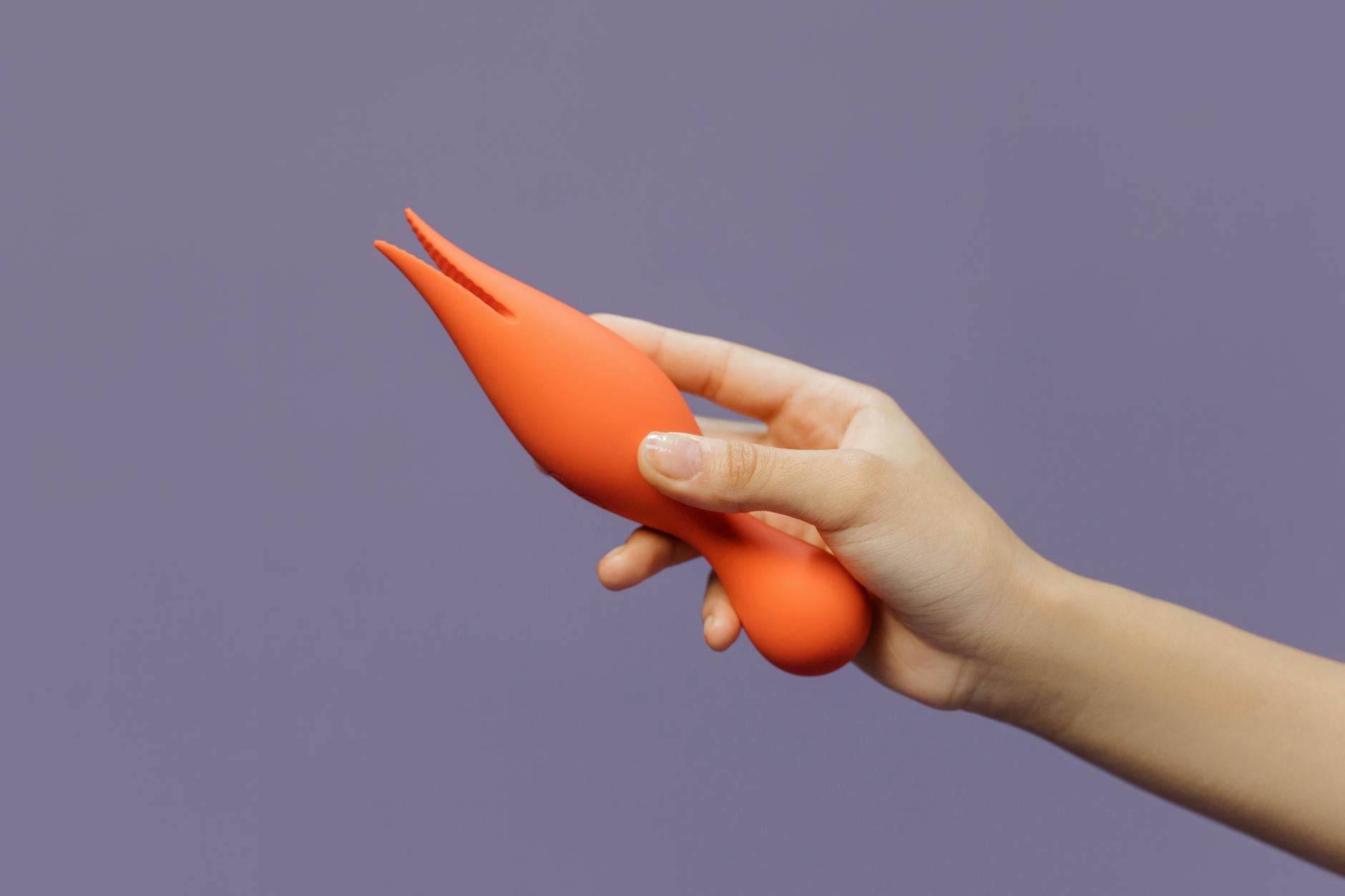
Photo by cottonbro studio on Pexels
The conversation to have with your partner
This matters. Most partners assume low sex drive means low attraction or growing resentment. Neither is usually true when fatigue is the culprit. But they assume it anyway, and now both of you are in a spiral of hurt.
Have this conversation outside the bedroom, during a calm moment. "My desire has flatlined not because of us, but because my nervous system is fried. I'm going to rebuild this on my own for a bit. Not because I don't want you, but because I need to reconnect with my own pleasure first. Then we can rebuild together."
Then show them you mean it. Use the lemon vibrator. Have an orgasm. Notice what shifts in how you feel about your body, about sex, about them.
Some partners will want to be involved in this process. Some will feel protective and supportive from the sidelines. Both are fine. What matters is you're not white-knuckling through partnered sex out of obligation while your nervous system is screaming for rest.
Moving from solo back to partnered
Once you've reactivated your own pleasure, partnered sex becomes a different conversation. You're not trying to manufacture desire. You're working with actual baseline interest that exists again.
Start small. Not a full encounter. Maybe foreplay only. Maybe a hand job while one of you uses the Lem. Maybe penetration without the expectation of orgasm. You're rebuilding tolerance for vulnerability with another person present, which is different from solo pleasure.
The lemon vibrator can absolutely be part of this. Many couples find that a clitoral vibrator during partnered sex removes the pressure on your partner to "get you there." Your body is doing its own thing. They're doing theirs. You're together but not entirely dependent on their technique or timing.
This actually increases intimacy, weirdly. You're less in your head. They're less anxious about performance. Both of you are more present.
The reality of maintaining desire in long relationships
Here's what I tell my clients: fatigue-driven low desire is a symptom, not the disease. The disease is usually one of three things. One, you've lost other forms of intimacy—affection, eye contact, conversation—and sex feels disconnected from the rest of your relationship. Two, there's unresolved conflict or hurt you're not talking about, and resentment is masquerading as lack of interest. Three, one or both of you need individual work on stress management because you can't outsex burnout.
The lemon vibrator addresses the symptom. But you still need to look at the bigger picture.
Are you touching each other in nonsexual ways? Are you having real conversations? Are you managing stress individually so you show up with something left to give? These matter more than any toy.
But in the meantime, while you're sorting the bigger stuff, a clitoral vibrator is permission to remember your body. To stop performing. To access pleasure on your own terms. And honestly? That's revolutionary in a long-term relationship.
Why this matters for your partnership long-term
Couples who rebuild desire together, even through solo exploration first, tend to have stronger sex lives on the other side. Because they've separated "I need to feel pleasure" from "we need to have sex." They're not the same thing.
When you use a lemon vibrator to reset your own nervous system, you're teaching your body something critical: pleasure is always available to you. You don't need the perfect conditions. You don't need your partner to be in the mood. You don't need to manufacture enthusiasm.
This sounds simple, but it's not. Most people with low desire have lost touch with the fact that their body is capable of pleasure independent of partnership. A vibrator reminds you of that. Then, from a place of baseline interest, partnered sex becomes possible again.
The lemon vibrator isn't a Band-Aid on a broken relationship. But it's absolutely a tool for rekindling intimacy when burnout has temporarily turned it off.
People also ask
Can using a lemon vibrator solo actually fix a relationship's sex life?
No, but it's a crucial first step. Solo pleasure resets your nervous system and reminds your body that desire still exists. From there, you have the capacity to rebuild partnered intimacy. Without that reset, you're trying to force sex while exhausted, which deepens the disconnect. A clitoral vibrator gives you the space to rediscover your own pleasure first.
Is it normal to lose all desire when you're burned out?
Completely normal. Fatigue suppresses dopamine and elevates cortisol. Your brain literally deprioritizes pleasure when it thinks you're in survival mode. It's a nervous system response, not a personality flaw or a sign your relationship is doomed. When stress drops, desire usually resurfaces on its own.
Should I tell my partner I'm using a lemon vibrator to rebuild my sex drive?
Yes, but the framing matters. Not "I'm taking a break from you sexually." More like "My nervous system needs to reset, and I'm going to explore solo pleasure for a bit so I can come back to us from a better place." Most partners respond well to honesty and a clear timeline. Secrecy tends to create the resentment you're trying to avoid.
How long does it take for desire to come back after burnout?
Varies wildly. Some people feel a shift within days. Others take weeks or months. It depends on how deep the burnout is, whether stress is still present, and what else is happening in the relationship. A vibrator can speed up the reset, but it's not a magic bullet. Managing the underlying stress matters too.
Can my partner use the lemon vibrator on me if I'm trying to rebuild desire?
Absolutely, once you're ready for partnered touch. Starting solo first removes performance pressure and helps you remember what you like. Once that reconnection happens, bringing your partner in can feel really good because now you're not performing. You're guiding them toward what actually works for your body.
What if my partner gets jealous about me using a lemon vibrator?
That's worth a conversation outside the bedroom. Jealousy often masks fear. "Are you losing interest in me?" "Am I not enough?" Reassure them that this is about you reconnecting with your own body, not about anything they're doing wrong. Many couples find that sharing this kind of vulnerability actually deepens their bond.
The bottom line
When fatigue has dimmed your desire, a lemon vibrator becomes a small act of reclamation. It's saying to your nervous system: you're allowed to feel good. You're allowed to have pleasure that doesn't require performance. You're allowed to remember your body.
From that foundation, everything else becomes possible again. Partnered sex stops feeling like a chore and starts feeling like connection. Your relationship has room to breathe.
If you're ready to explore, the Hello Nancy collection includes clitoral vibrators designed for exactly this kind of gentle, pressure-free pleasure. Your body is waiting to remember what it's capable of.