Let's be real. If your desire is all over the place, you're not alone. And you're definitely not broken. Your body is doing exactly what it's designed to do: responding to hormonal shifts that happen on a predictable cycle.
The problem isn't your desire. It's that we've been taught to expect it to be flat and consistent, like a light switch that stays on. It's not. Desire is more like a dimmer. It goes up. It goes down. Sometimes it's barely visible. This is normal, and once you understand the pattern, you can work with it instead of against it.
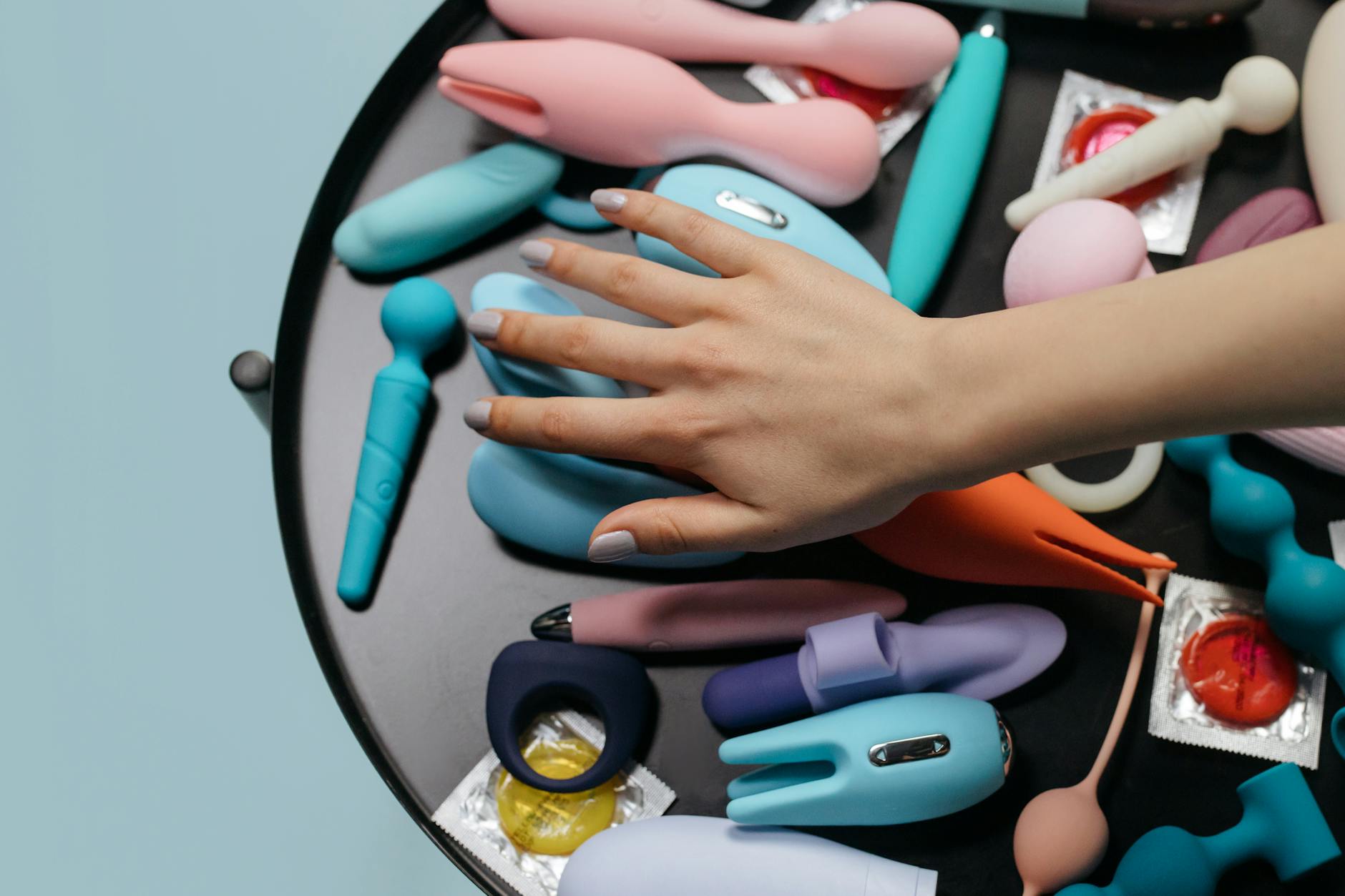
That's where tools like a lemon vibrator come in. Not as a fix for "broken" desire, but as a way to stay connected to pleasure across all the phases of your cycle, even the ones that feel quieter.
Three hormones are doing most of the heavy lifting: estrogen, testosterone, and progesterone. They're not steady. They rise and fall in predictable waves.
During the follicular phase (the first part of your cycle, from period to ovulation), estrogen is climbing. Your energy goes up. Your motivation for sex usually goes up too. Testosterone starts rising toward ovulation. This is often the window where desire feels easiest.
Around ovulation, testosterone peaks. This is biologically the horniest window of the month. If you feel like your body is basically shouting at you to have sex, you're experiencing what evolution built in. It's not being oversexed. It's your body doing its job.
Then comes the luteal phase. Progesterone rises. Estrogen and testosterone both drop. Your energy often drops with them. Your need for stimulation changes. Some people describe this phase as needing "more" to get turned on. Others describe it as feeling ready to disconnect entirely. Both are correct, depending on your body.
The few days right before your period, desire can crater almost entirely. This isn't depression. It's hormones. And it passes.
Most sex advice assumes desire is stable. "Set the mood," people say. "Carve out time for intimacy." Great. But if your arousal is fundamentally different in week two versus week four, the same mood and the same timing won't land the same way.
You might feel like you're doing everything right and still feel disconnected from pleasure in the second half of your cycle. You're not doing anything wrong. Your neurochemistry just shifted.
This is why tracking matters. Not obsessively. Not performatively. Just enough to notice the pattern.
You don't need an app (though apps help). You need to notice. For one full cycle, jot down a simple note each day: How's my desire today? Scale of 1 to 10, or just "high," "medium," "low."
After one cycle, you'll see the shape. You'll notice the weeks when desire climbs, the week when it peaks, and the week when it's barely there. Once you see the pattern, you don't have to track every day. You just know the shape and can anticipate it.
This matters because anticipation lets you plan. If you know week two is your high-desire window, you can protect some unrushed time then. If you know the luteal phase feels different, you can prepare.
The beauty of a device like the Lem is that it works at every intensity level. You can adapt your approach without switching tools.
In your high-desire phase (follicular and ovulation). You might explore higher patterns. The Lem vibrator has multiple intensity settings. Week two is the time to experiment with what feels good at the higher end. Your tissues are more responsive. Your arousal builds faster. Lean into that.
In your luteal phase (after ovulation). You might need more warm-up time. You might start at lower patterns on the lemon clitoral vibrator and work your way up, or you might just stay in a lower range. What matters is that you're still exploring pleasure, just differently. Some people find that the sensation-without-friction approach of an air-suction device like the Lem is actually easier during the luteal phase, because you don't need the tissue responsiveness of the follicular phase.
In your lower-desire days (usually the few days before your period). You have options. Option one: rest. Pleasure isn't mandatory. Option two: stay gentle. Use your lemon vibrator at the very lowest setting, or don't use it at all and explore touch that doesn't require arousal. Fullstop.
During the follicular and ovulation phases, your body produces more natural lubrication. You might not need lube at all, or just a little. During the luteal phase, that changes. Your natural lubrication decreases. This isn't a sign that something's wrong. It's a hormonal shift.
For a lemon sucker like the Lem, lube is optional but worth considering. Water-based lube can make the experience feel different, sometimes better, in the second half of your cycle. Silicone lube stays slicker longer, but avoid it with silicone toys.
Keep it simple. One good water-based lube. Use it when it feels right, skip it when it doesn't.
If you're partnered, odds are good that your cycles don't sync. You're high-desire in week two. They're high-desire in week three. You can either fight that, or you can plan around it.
This is where solo pleasure becomes less of a "instead of" and more of a "part of." You don't have to be in sync to have a good sexual relationship. You can each tend to your own pleasure, and then come together in ways that work for both of you.
A lemon vibrator or other personal device gives you agency. You can meet yourself in the luteal phase instead of waiting for a partner who's in a different phase. You can explore what feels good solo, which actually makes partnered sex better because you know your body better.
You start tracking because your desire feels chaotic. After a few months of noticing the pattern, the chaos resolves into shape. You stop fighting what's "supposed" to be flat and start working with what actually is.
That's when things shift. You stop feeling broken and start feeling informed. You can plan sex. You can manage your own pleasure. You can communicate to a partner: "I'm in my low phase. That's why I need something different right now."
Variable desire isn't a problem to solve. It's information to use. And once you start using it, pleasure becomes less like something that happens to you and more like something you're actively creating.
Yes, but not in the way you might think. Tracking doesn't magically increase your desire. It gives you permission to expect that your desire will vary, and it helps you plan accordingly. Knowing when you're likely to feel high-desire or low-desire means you stop blaming yourself for the low phases. You stop thinking you're broken. You just adjust your approach.
Absolutely. A lemon vibrator works across all phases. Your natural lubrication might shift, but the device adapts. If you're noticing significant dryness in the luteal phase, adding water-based lube is straightforward. The vibrator itself doesn't change. Just your setup does.
That's worth paying attention to. If your follicular and ovulation phases are supposed to be high-desire but feel flat, other things might be at play: stress, relationship tension, medication side effects, or underlying health issues. A few days of low desire in the luteal phase is normal. Consistently flat desire across all phases might be worth discussing with a doctor or therapist.
No. Pleasure isn't homework. But there's a middle path between "force it" and "skip it entirely." You can use a device like the Lem at very low intensity, just for the sensory input, without any expectation of arousal. Some people find that gentle touch during low-desire phases actually rekindles the connection to their body, even without orgasm. Others find that rest is what they need. Honor what your body is actually asking for.
Not necessarily. Desire varies within healthy relationships all the time. What matters is whether you and your partner can communicate about it and adapt. If your partner feels rejected during your low phases, that's worth addressing together. But the solution isn't to force constant desire. It's to find ways to stay connected that don't depend on you having high libido all month.
Yes, but the pattern might look different. Hormonal birth control suppresses your natural cycle, so the typical high-and-low rhythm you'd experience off hormones might be flattened or shifted. If you're on the pill, patch, or ring, you might notice desire is more consistent but overall lower. If you're on a longer-acting method like an IUD, the pattern might look closer to your natural cycle. Track your own pattern and work with what you actually experience, not what you think should happen.
Variable desire stops feeling like a personal failing once you understand it's biology. Your body isn't working against you. It's working exactly as designed. The tool isn't to override that. It's to work with it.
A lemon vibrator or other clitoral vibrator gives you flexibility across all phases. You're not locked into one approach. You can adjust intensity, approach, and timing based on where you are in your cycle.
That's the real power of understanding your cycle. Not predicting it perfectly. Just knowing enough to stop blaming yourself and start planning. Once you're there, pleasure becomes something you can actually create, not something you're waiting to happen.
If you're still not sure how to move forward, we're here to help. Questions about how tools work across your cycle, or how to navigate this with a partner? That's exactly what we're built for.