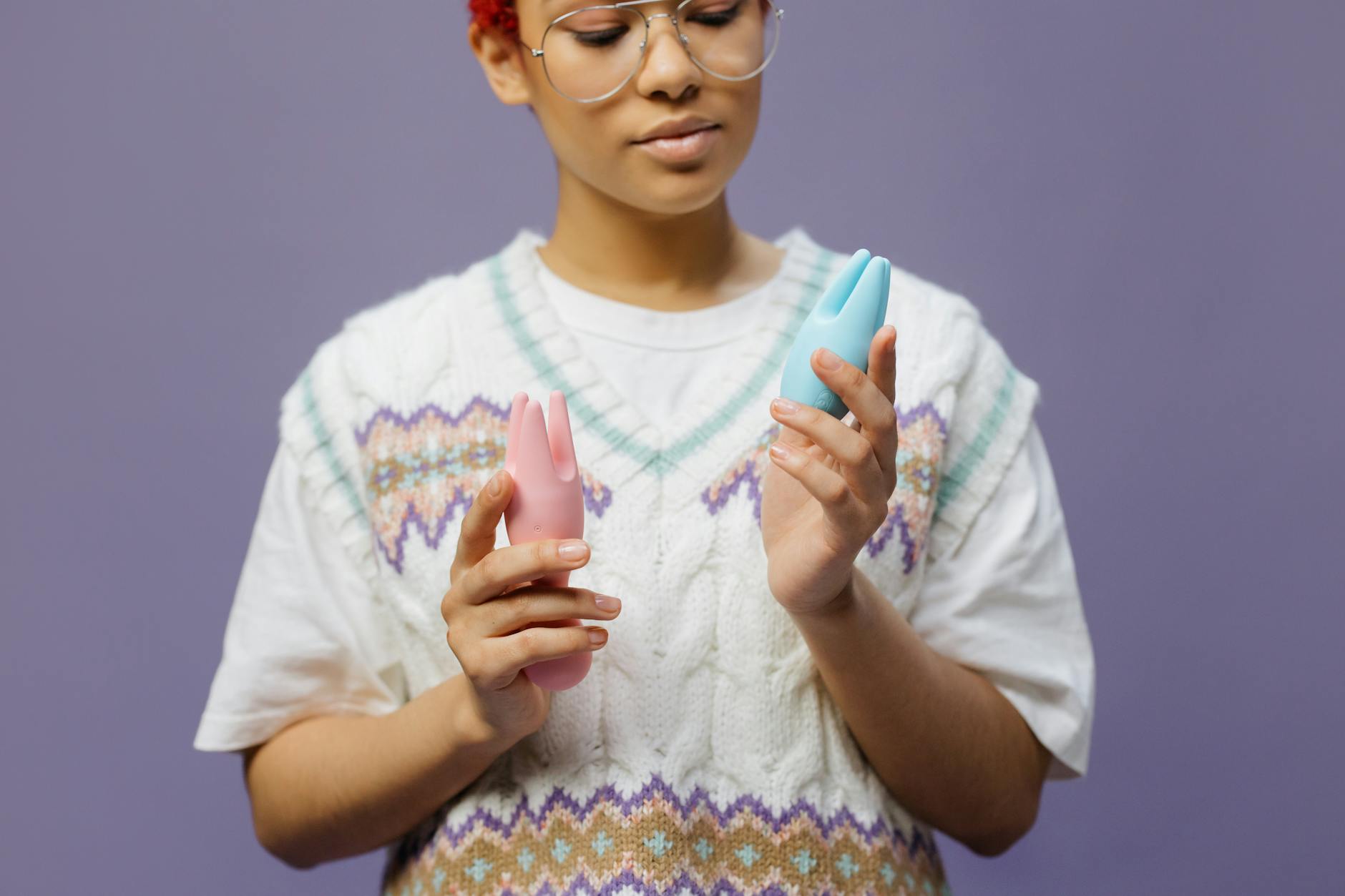
Here's the thing about new relationships and sex toys
Most of us grow up believing that introducing a vibrator to a partner means one of three things: admitting your orgasms are fake, announcing that your partner isn't enough, or revealing something shameful about yourself. None of that is true. But that's the story we learned, and it dies hard.
The reality is quieter and more practical. You have a tool that works for you. A partner who respects you will see it that way. A partner who doesn't is giving you information about compatibility early, which is actually a gift.
Let's talk about how to navigate this moment with honesty, clarity, and just enough nerve.
Why the anxiety hits different with someone new
When you've been with a partner for years, rejection still stings, but you have context. You've built trust. You know their defaults. With someone new, everything feels thin. One wrong move and the whole fragile thing collapses.
That's partly real. Early intimacy is delicate. But here's what research on long-term couples shows: people who communicate about sexual preferences early, including tools and boundaries, build stronger foundations than those who hold back. Vulnerability at the right moment isn't a risk factor. It's a bonding moment.
The trick is timing and framing. Not because you're hiding something, but because context matters. The conversation at week three is different from the conversation at week eight. The conversation during sex is different from the conversation over coffee. Choose the setting where vulnerability feels safe on both sides.
The pre-conversation setup
Before you say anything, get clear on your own answer to three questions.
Why do you use it? Not "I can't come without it" (which implies a problem), but "I know what pattern my body responds to, and this tool delivers it reliably." That's the truth. That's the frame.
What do you want from them right now? Do you want them to use it on you? Do you want them to just be present and not weird about it? Do you want them to understand why you love it without necessarily being involved? Be precise.
What's a hard no for you? Is judgment a dealbreaker? Is mockery something you can't come back from? Know your line. That clarity will make the conversation steadier because you won't be begging for understanding you don't deserve.
Once you're clear, you're not asking for permission. You're informing someone who matters that this is part of your life.
How to actually bring it up
Don't ambush. Don't whisper it during sex when someone's vulnerable. Don't bury it in a long conversation where your fear comes through.
The best moment is calm, clothed, and outside the bedroom. "Hey, I want to tell you something because I like you and I want you to know me. I use a vibrator sometimes. It's not because anything's wrong with you or with us. It's just how my body works best. I wanted you to know in case it comes up, and I wanted to know how you felt about it."
That's it. Then stop talking. Let them sit with it.
If they ask questions, answer them straight. If they need time to think, give them time. If they get weird or dismissive, that's data. Take it seriously.
Most partners, honestly, are more curious than freaked out. The fear in your head is usually bigger than the actual moment. But not always. And if it is, you'll want to know that before you're three months in.
Reading their response and what to do next
They say yes and seem genuinely fine. Great. Don't oversell or over-explain from there. You don't need to do a product presentation. Keep it simple. "Thanks for being cool about it."
They say yes but seem uncertain. Check in once: "Does it actually feel okay to you, or are you being nice?" Give them room to be honest. Some partners warm up over weeks. Some don't. Both are okay, but you need to know which.
They say no. This is where clarity matters. Is it a "no, not for me to be involved" or a "no, I think it's weird and I don't want to hear about it"? The first is workable. The second is a compatibility question you get to sit with.
They get defensive or make it weird. "I thought I was enough for you." "That's kind of sad." "That's what guys do." Pause the pleasure conversation. Address the insecurity. You can say: "This isn't about you being enough. This is about me knowing my own body. Both things are true at the same time."
If they won't drop it or can't hear that, you're seeing a pattern of rigidity around intimacy. That matters long-term. Take it seriously.
Introducing the actual tool
Once you've had the conversation and they've said yes, don't rush the first time. Let it feel natural. You don't need to perform or narrate. You're not teaching them. You're just being yourself.
If they're curious and want to help, great. Show them what you like. If they'd rather step back and let you do your thing, that's fine too. Different partners, different comfort zones. Respect both.
Something practical: if you're using a lemon clitoral vibrator or a lemon sexual toy for the first time with someone watching, start low. The sound might be louder than you think when you're nervous. The intensity might feel more intense when someone else is in the room. That's okay. You're adjusting to a new variable, not proving anything.
One thing I've noticed with couples who navigate this well: they laugh. Not at each other, but at the awkwardness of the moment itself. "This is weird, right?" "Yeah, totally weird." Acknowledgment of the strangeness makes it smaller.
The longer game: when lemon vibrators become normal
After a few times, most partners stop thinking about it as a "thing." It becomes part of your landscape. The lemon sucker that lives in your nightstand. The lemon clitoral vibrator that's just there, like your toothbrush.
Some partners eventually want to be involved. Some are happy to stay out of it. Neither is better. What matters is that you stopped performing nervousness and started being regular about your pleasure.
If your partner moves from acceptance to curiosity, you get to decide how much you want to include them. Some people love using tools together. Some prefer them solo. You're allowed to have both preferences at different times.
The couples I work with who have the healthiest sex lives aren't the ones who do everything together. They're the ones who each know what they need and can ask for it without shame. You learning to use a lemon vibrator and feel confident about it? That's part of that. Your partner seeing your confidence and respecting it? That's the other part.
What if things go sideways
Sometimes you have the conversation, they seem fine, and then three months later they make a snide comment. Or they shame you during sex. Or they pressure you to stop using it because it makes them feel inadequate.
That's not a vibrator problem. That's a partner problem. And it's worth addressing directly. "When you said that, it felt like you weren't actually okay with it. Can we talk about that?"
If they can't have that conversation without defensiveness, or if the shaming continues, you have a choice. You can prioritize the relationship and give up something that matters to you. You can set a boundary and use it anyway, accepting the tension. Or you can recognize this as a sign that the foundation isn't solid enough to build on.
All three are valid. But they're choices. Don't slip into resentment by pretending the problem doesn't exist.
The actual framework: from intro to integration
Week 1-2: You decide this matters to you. You get clear on why.
Week 3-4: You have the conversation, clothed and calm, outside the bedroom.
Week 5-6: You use it solo a few times so they're not seeing it for the first time during the actual moment.
Week 7-8: First time using it with them present. Low pressure. You do your thing.
Week 9-12: It becomes normal. Maybe they ask questions. Maybe they want to help sometimes. Maybe they keep their distance. All of it is fine as long as you're both actually okay.
Month 4+: You're no longer introducing a vibrator. You're just living with a partner who knows you use tools that work for you, and they've decided they can sit with that.
That's the arc. Not magical. Not romantic. Just honest.
FAQ: What partners actually ask (and what to say)
Does this mean my orgasms aren't real with me?
No. The orgasm is yours either way. The tool just makes it easier to get there. Some partners need coffee to focus at work. That doesn't mean their work isn't theirs.
Should I be worried that you prefer the toy to me?
You're not in competition with a silicone tool. I like sex with you. I also like knowing my own body. Both things can be true.
Can we use it together?
Yes, if you want to. But I might also want to use it alone sometimes. Does that feel okay?
Is there something wrong with your body?
No. My body just has preferences. Your body has preferences too. We're not that different.
Will you always need this?
I don't know. But even if I do, that's not a failure on your part. It's just how I'm built.
Are you not satisfied with our sex life?
I'm satisfied. And I'm also always looking to feel even better. That's not about you. It's about me knowing what I want and asking for it.
You don't owe anyone shame
The biggest thing I want to land here: you don't need permission to use a lemon vibrator. You don't need a partner's approval to know your own pleasure. What you do need is honesty with yourself about whether a partner can respect that part of you.
Some will. Some won't. And knowing which is part of choosing well. Vulnerability isn't about changing someone's mind. It's about seeing whether they can hold something tender when you hand it to them.
The ones who can? Those are keepers. Not because they suddenly love vibrators, but because they love you enough to let you be whole.