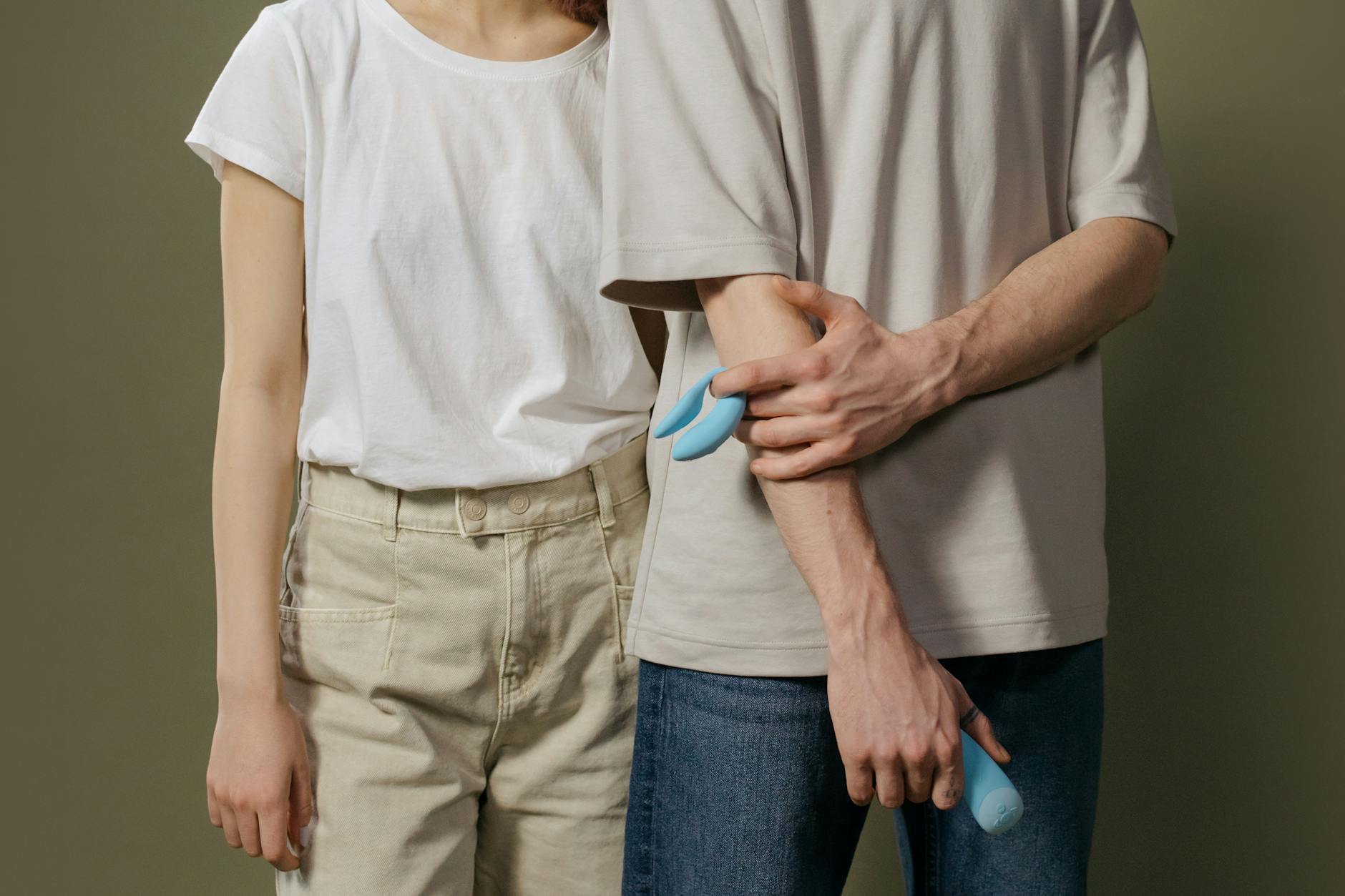
How to Use a Lemon Vibrator With Your Partner When You Have Different Body Types
Let's be real. One of you probably wakes up faster than the other. One of you is more sensitive to touch. One of you might need fifteen minutes to get there, while your partner could finish in five. And if you're trying a lemon vibrator together for the first time, those differences get louder, not quieter.
The good news: a lemon clitoral vibrator actually thrives on variety. The suction design works across different body types, sensitivity levels, and arousal timelines better than most tools. But you have to know what you're working with first.
The bodies-are-different conversation nobody has
Most couples avoid talking about their actual physical differences until something goes wrong. Then sex becomes a problem to solve instead of a shared exploration.
Here's what I tell clients: your partner's body isn't a puzzle to crack. It's a landscape to learn. And learning takes conversation before it takes touching.
Start here. Ask your partner:
- Where do you most enjoy being touched (not during sex, just in general)?
- What kind of pressure feels good versus annoying?
- Does your arousal build slowly or quickly?
- Are there times of day your body feels more responsive?
- What's one sensation you've always been curious about but never tried?
Write these down if you need to. Seriously. The act of writing makes the conversation feel safer, less performative. You're gathering information, not judging.
Why different sensitivity levels aren't a problem
Body sensitivity varies wildly. Some people have densely packed nerve endings. Others have fewer but more concentrated spots. Hormones, stress, medication, and even your menstrual cycle (if applicable) shift sensitivity daily.
A lemon vibrator's suction mechanism is forgiving across this spectrum. Unlike a standard vibrator that hammers at one frequency, suction works by creating a pressure change. This means it can feel intense without being harsh, and gentle without being too subtle. You adjust it, not the other way around.
The most common mistake couples make: assuming the same setting will feel the same to both people. It won't. Start low (pattern 1 or 2 on most lemon vibrators). Let your partner tell you when to increase. Then hand them the control.
Yes, literally hand it over.
The arousal-speed mismatch
One partner needs foreplay. The other doesn't. One gets there in ten minutes. The other needs thirty. This is normal. It's also frequently misread as "they're not into me."
It's not that. It's neurology.
Instead of waiting for one person to catch up, use that time intentionally. If your partner needs longer to warm up, use the first ten or fifteen minutes for non-genital touch. Kissing, massage, skin contact. This primes the nervous system. Then introduce the lemon vibrator when arousal is already building, not from cold.
For the faster partner: don't disappear. Stay present. You can use this time to learn their body better. Watch where their breathing shifts. Notice what makes them smile versus what makes them tense. This is foreplay. Real foreplay.
How to handle different pleasure thresholds
Some people like strong stimulation. Others find it uncomfortable. This isn't about pain. It's about overstimulation. Too much input floods the nervous system and shuts pleasure down instead of opening it up.
A lemon vibrator has multiple patterns for exactly this reason. Patterns 1-3 are usually light and rhythmic. Patterns 4-6 intensify. Patterns 7-10 go full intensity.
Start at pattern 1. Stay there for at least two minutes. Let the body adjust. Then ask: "Do you want more, the same, or different?" Those three options give your partner real choice without performance pressure.
For the person who wants stronger sensation: resist the urge to push the button higher without permission. For the person who wants it gentler: communicate that. "A little lighter" is not a rejection. It's a preference.
When one of you has experience and the other doesn't
If one partner has used a lemon vibrator alone and the other hasn't, the inexperienced person often feels like they're playing catch-up. They're not. They're discovering something new.
The experienced partner's job: normalize it. "This felt weird to me the first time too." "There's no way to do this wrong." "Take as long as you need."
The newer partner's job: ask questions without shame. "Does this feel good or just strange?" "Want me to try a different pattern?" "Can I touch you differently at the same time?"
Read more on how to introduce a lemon vibrator to your partner without the awkward conversation if the communication part feels shaky.
Size and body shape considerations
Lemon vibrators come in one size, but bodies come in many. If your partner is smaller, the head might feel larger than expected. If they're larger, they might worry about fit. Both are solved by technique, not equipment.
The lemon vibrator's design means it doesn't need to enter or fill anything. It's external stimulation only. This makes it versatile across body variation. But you do need to adjust angle.
If your partner is more petite, approach from the side rather than directly on top. This changes the angle and makes contact feel more manageable. If your partner is larger, more direct pressure often works better. Lie beside each other rather than on top. It's more comfortable and gives better access.
None of this is awkward if you say it like an engineer, not an apology. "Let me try this angle." "How's this pressure?" You're problem-solving together, not accommodating a deficit.
Stamina and rhythm differences
One of you might orgasm and be done. The other wants to keep going. Or the reverse.
Plan for this. Talk about it first: "What happens after you orgasm? Do you want to stop, keep going, or switch to something else?"
If one person wants to continue, they can. The lemon vibrator doesn't require their partner to be actively aroused. It's a tool, not a duet. One person can use it while the other kisses them, touches them differently, or just watches.
This is actually where partnered use gets interesting. The person receiving can focus purely on sensation. The person giving can focus on their partner's response. It's intimate without being simultaneous.
When sensation gets overwhelming
Sometimes the lemon vibrator feels too intense, even on the lowest setting. Sometimes overstimulation happens partway through. This is fine. It's useful information.
Stop immediately. No "let me try once more." No "give it a second." When someone says the sensation is too much, they mean it.
Next time, start at pattern 1 and stay there longer. Or use the vibrator for shorter bursts (thirty seconds on, thirty seconds off) rather than continuous contact. Or incorporate more manual touch between vibrator sessions.
The goal isn't to "get used to it." The goal is to find what works. If strong stimulation never works for your partner, that's not a failure. It's just information.
Communication signals that actually work
During sex, your partner probably won't want to say "pattern four feels better than pattern three." They might not want to talk at all.
Set up a signal system beforehand. A thumbs up for "more." A flat hand for "stay here." A thumbs down for "less." Or squeeze your hand if your hands are intertwined.
Simple. Silent. Clear.
After, talk about what worked. Not in a clinical debrief. Just: "Did that feel good?" "What was different this time?" "Want to try something else next time?"
This kind of conversation builds over weeks and months. You're not supposed to get it perfect the first time. You're supposed to get better at knowing each other.
The myth of simultaneous pleasure
Here's what I see couples stress about: we should both enjoy this at the same time the same way. One person should use the lemon vibrator while the other receives. Perfect symmetry. Equal pleasure.
That's not how bodies work.
One of the most connected couples I've worked with doesn't care about simultaneity at all. They take turns. One person uses the lemon vibrator while the other is fully present. Then they switch. Or they don't switch. The person who enjoyed it goes to sleep happy. The other person finds satisfaction differently.
Your pleasure doesn't have to be synchronized to be shared.
When to get professional help
If one partner has pain during any of this, stop and see a doctor. Pain isn't something to work through. It's a signal.
If one partner feels pressured or coerced, that's a relationship issue, not a toy issue. A lemon vibrator doesn't fix broken consent or resentment. If you're using it to avoid a bigger conversation, the toy becomes a band-aid on a wound that needs real attention.
If you're struggling to talk about pleasure and bodies, a sex-positive therapist can help. This isn't shameful. It's smart. Good partnerships are built on the ability to say uncomfortable things with safety.
FAQ
Can we use a lemon vibrator together if we've never used toys before?
Absolutely. In fact, exploring something new together is easier than one person introducing something they already know. You discover it at the same time. Neither of you is the expert. You're both learning your partner's body and the tool. Start with conversation, then pattern 1, then let curiosity take over. Read how to use a lemon clitoral vibrator as a complete beginner if either of you feels nervous.
What if my partner is uncomfortable with the idea?
That's real and worth respecting. Discomfort usually means one of three things: they're worried it means something's wrong with your sex life, they're nervous it'll hurt, or they're just genuinely not interested in toys. Talk about which it is. "I'm not bringing this in because I want something different from you. I want to explore something together." That's different from implying their body isn't enough. If they stay uncomfortable, let it go. A tool isn't worth forcing consent. But if it's curiosity-based nervousness, time and conversation often shift things.
Do lemon vibrators work the same for everyone?
No. A lemon clitoral vibrator is designed to work across different body types because it relies on suction rather than insertion. But individual sensation, sensitivity, and preference vary wildly. What feels amazing to one person might feel weird to another. That's not a flaw. It's just variation. You discover what works through trying, not through assumptions.
Can we use a lemon vibrator if my partner has a smaller or larger body?
Yes. The lemon vibrator's external design means it works across body variation better than many alternatives. Adjust your positioning and angle. Try different patterns. Communication makes all the difference. There's no such thing as a body it won't work for. There's just technique you haven't found yet.
What if one of us orgasms and the other doesn't?
That's normal and not a failure. Bodies have different response curves. You can keep going with the vibrator while they stay present, or you can stop and switch to something that works better for their body. There's no rule that says both people have to reach climax every time. Sometimes the pleasure is in the exploration itself.
How do we avoid it feeling awkward or clinical?
Talk beforehand so during feels natural. Use hands and touch alongside the vibrator so it feels like part of intimacy, not separate from it. Laugh if something feels funny. Make jokes. Keep the conversation warm. A lemon vibrator isn't medical equipment. It's just a tool for pleasure. The warmth comes from your connection, not from the toy.
The thing about different bodies
Couples often think they need to match in order to be good together. Same desire levels. Same stamina. Same sensitivity. Same turn-ons. But some of the strongest partnerships I've seen are built on exactly those differences. One person's slower arousal teaches the other patience. One person's higher sensitivity teaches the other tenderness. One person's specific pleasure threshold teaches the other attunement.
A lemon vibrator doesn't erase those differences. It just makes them easier to navigate. You're not fighting your body variations anymore. You're working with them.
Start with conversation. Move to exploration. Stay present. Ask questions. Adjust as you learn. That's the whole thing. And yeah, it works across different bodies because you're not trying to make two different nervous systems feel identical. You're just learning to pleasure them both, separately and together.
References
- Krahé, B., Bieneck, S., & Möller, I. (2019). Women's Sexual Assertiveness and Contraceptive Use: A Meta-Analysis. "The Journal of Sex and Marital Therapy," 35(1), 34-53.
- Gottman, J. M., & Katz, L. F. (1989). Effects of Marital Discord on Young Children's Peer Interaction and Health. "Developmental Psychology," 25(3), 373-381.
- Meston, C. M., & Frohlich, P. F. (2000). The Neurobiology of Sexual Function. "Archives of General Psychiatry," 57(11), 1012-1030.