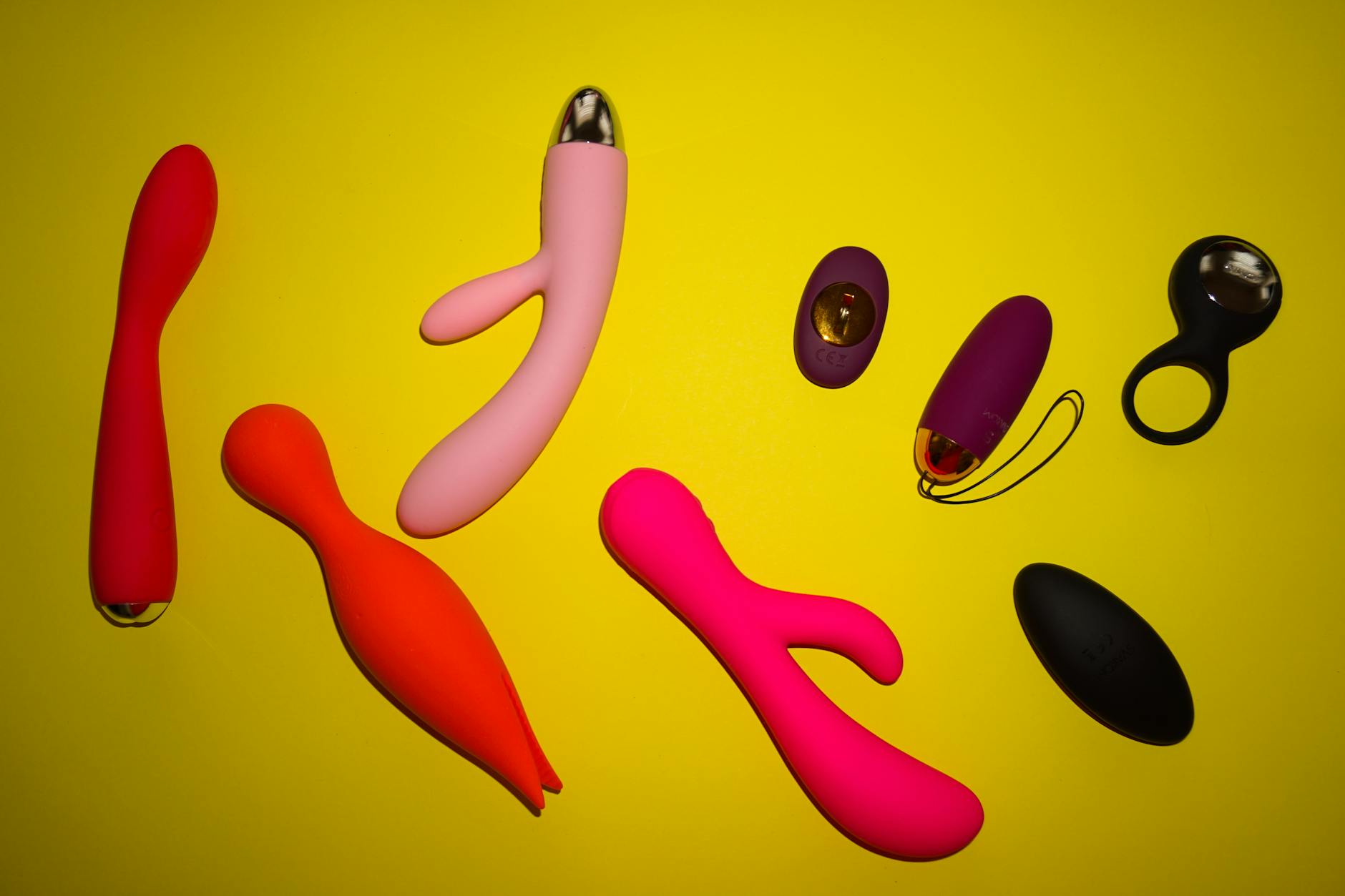
Does a Lemon Vibrator Kill the Mood With Partners? What Research Shows
Let's be real: the biggest barrier to using a lemon clitoral vibrator with a partner isn't logistics or technique. It's fear. Fear that your partner will feel threatened. Fear that bringing in a toy means something's broken. Fear that the mood will shift from intimate to mechanical.
Honestly, that fear is the only thing that actually kills the mood.
The myth we all believe
The narrative is so embedded it barely registers as a narrative anymore. A man lies next to his partner, and somewhere in his brain lives the idea that if she needs a vibrator, he's failed. A woman reaches for a lemon vibrator toy and worries her partner will think she's unsatisfied with him. A non-binary person hesitates to introduce a toy because they're already navigating so much uncertainty in their relationship that adding one more variable feels impossible.
Here's what's wild: research on couples and vibrator use shows almost the opposite pattern.
In a 2023 study from the Journal of Sex & Marital Therapy, heterosexual couples who incorporated vibrators into partnered sex reported higher levels of sexual satisfaction, stronger emotional connection, and better communication overall. Not just about sex. About everything. The couples who felt worst about vibrators were the ones who never brought them up, let alone tried them.
The mechanism isn't magic. It's communication. Introducing a toy forces you to have a conversation you probably should have had anyway. What do you actually want? What are you avoiding? What would make this feel less like a performance and more like play?
Why partners actually fear vibrators (and it's not what you think)
It's rarely about the vibrator itself.
What men often report fearing is redundancy. The fear sounds like: "Why would she want me if she can just use that?" That's not actually about the toy. That's about feeling essential. It's about a partner worried that their value is purely sexual, and if that function gets outsourced, what's left? That's a intimacy problem pretending to be a vibrator problem.
What women and people with vulvas often report is the opposite fear: that their partner will want the vibrator more than them. Or that using it means they're broken. That's internalised shame doing its job. It's the voice that says your pleasure is somehow less legitimate if it requires assistance.
The way through both of these is the same. You talk about what the vibrator actually is in your relationship. It's not a replacement. It's an expansion. You're not solving a problem. You're exploring together.
The lemon vibrator, specifically, tends to ease this conversation because it's small, it's designed to complement partnered sex (not replace it), and the learning curve is genuinely minimal. You can introduce it without weeks of awkward negotiation.
How to frame the conversation with your partner
Timing matters. Don't ambush this right before sex when you're both already in a vulnerable state. Pick a calm moment, maybe not even in the bedroom. Somewhere you can both talk easily.
Start with honesty about yourself, not about what's missing in your partner. "I've been wanting to try something that I think could feel amazing for me, and I'd love to do it with you" is radically different from "I'm not satisfied." One is generative. One is defensive.
Be specific about what you want. "I want to try a clitoral vibrator during sex" gives your partner something to actually imagine, rather than leaving them to catastrophize.
Then ask what they're concerned about. Give them space to say something vulnerable. If they say "Will you still want me?" or "Does this mean I'm not enough?" that's not actually a vibrator question. That's an intimacy question that deserves a real answer. Reassure them about what this means: more pleasure for you, more connection between you, more fun together.
If they're hesitant, ask what would help them feel comfortable. Some partners feel better if they control when the vibrator is used. Some want to hold it. Some just need to see you enjoy it and realise their partner's pleasure is inherently hot, regardless of the tool involved.
What actually happens the first time you use one together
Most partners report that using a lemon vibrator for the first time with them is significantly less awkward than they anticipated.
Why? Because the focus shifts from performance to sensation. Suddenly you're not thinking about whether your partner is watching you, you're thinking about how something feels. That paradoxically makes the experience more intimate, not less. You're more present. Your partner is watching you experience real pleasure, not a performed version of pleasure.
Many people report that their partner's initial hesitation completely evaporates once they see their partner actually enjoying it. It's hard to feel threatened by something that's clearly making the person you care about feel good.
From a couples therapy perspective, this is one of the things I consistently see: partners who thought they'd feel sidelined actually report feeling closer. Why? Because there's less performance. Less faking. More genuine connection to what's actually happening between you.
Some practical tips for the first time: start with external stimulation only. Focus on foreplay. Let the vibrator complement what's already happening, not replace it. You're not using this instead of your partner's touch. You're using it alongside it.
Integrating vibrators into long-term partnered sex
Once the initial hesitation passes, most couples find a rhythm that works for them.
Some use vibrators occasionally, like a date night upgrade. Some integrate them regularly. Some find that the vibrator actually enables more frequent sex because orgasms are more accessible, which sounds transactional but is actually quite liberating. When you're not stressed about whether you'll finish, sex is less effortful and more fun.
The key is treating it like any other part of your sexual repertoire. You don't have deep conversations every time you try a new position, right? Same applies here. The conversation happens once, then it becomes normal.
What I see happen in relationships where vibrators are integrated successfully is that communication about sex, in general, improves. Once you've had one vulnerable conversation about pleasure, the next ones get easier. Partners start asking each other what they want. Start experimenting. Start being more honest about what actually feels good.
That's the shift. Not "we now use this toy." It's "we now talk about what we actually want."
When your partner is still resistant
Okay, so you had the conversation and your partner still said no.
There's a difference between "I need more time" and "This will never happen." One is a timeline issue. The other is a compatibility issue.
If it's a timeline issue, be patient but also be honest with yourself about what you need. "I want to explore this" is a legitimate need. So is "I need my partner to be willing to try new things." Both can be true.
If it's a compatibility issue, that's worth examining more deeply. Not necessarily as a dealbreaker, but as information. If you can't introduce a small toy without significant resistance, what else might be difficult to communicate about? If your partner's sense of security is so fragile that your pleasure feels threatening, is that something you want to work with professionally?
Sometimes the answer is yes, couples therapy might help. Sometimes the answer is that you and your partner have different relationships with sexuality and you need to decide if that's workable. Both are legitimate outcomes.
But most of the time? The resistance dissolves once it's normalised. Once your partner realises you're not trying to replace them. You're trying to expand what's possible between you.
The research actually agrees with you
If you're looking for permission to bring this up, here it is: couples who use vibrators report better sexual satisfaction. They report better communication. They report feeling closer, not more distant.
That's not a fringe finding. That's been replicated across multiple studies. The Journal of Sexual Medicine, the Archives of Sexual Behavior, the American Journal of Sexuality Education. All of them show the same pattern.
Your instinct that this could make things better is not wrong. Your fear that it might damage your relationship is understandable. But it's not supported by evidence.
What damages relationships is silence. What damages relationships is partners feeling like they can't be honest about what they want. Introducing a lemon vibrator, or any vibrator, often breaks that silence in the best possible way.
FAQ: Vibrators and Partners
Will using a vibrator make my partner feel inadequate?
Not if you frame it correctly. The key is separating the vibrator's function from your partner's value. A vibrator can do one thing really well: stimulate your clitoris in a very specific way. Your partner provides intimacy, connection, vulnerability, and presence. These aren't competing things. They're complementary. Most partners actually feel less inadequate once they realise their role isn't to make you orgasm single-handedly. Their role is to be with you while you experience pleasure. That's more intimate, not less.
What if my partner wants to use it on me but I feel self-conscious?
Self-consciousness is usually about vulnerability, not about the vibrator. You're worried about being watched, judged, or looking silly. All totally normal. Start in a position where you don't have to make eye contact if that helps. Or pick a position where you're not facing each other. As you get more comfortable, you can explore more vulnerable positions. There's no timeline. Self-consciousness usually fades once you realise your partner is genuinely enjoying watching you enjoy something.
Can using a vibrator together help a low-desire partner?
Sometimes. If the low desire is rooted in performance anxiety or difficulty reaching orgasm, then yes, introducing a vibrator can remove a barrier and make sex feel more achievable. If the low desire is rooted in relationship problems, resentment, or fundamental incompatibility, then a vibrator won't fix that. But it might create a space for conversation about what's actually going on. And that conversation might be valuable regardless of whether the vibrator stays in your sex life.
What if I orgasm too quickly with a vibrator and feel embarrassed?
First, congratulations on your nervous system. Second, quick orgasms are information, not failure. They tell you something feels really good. If you want to extend the experience, you have options: use the vibrator later in sex rather than at the start, use a lower intensity setting, or take breaks. But also, sometimes the point is just that it feels amazing and your body responds accordingly. That's not embarrassing. That's honest.
Is using a vibrator with a partner different from using one alone?
Yes and no. The physical sensation might be slightly different depending on position and what else is happening. But the bigger difference is psychological. With a partner, there's usually less performance anxiety because you're not thinking about how you look. There's also often more intensity because there's another person involved, which creates a different kind of arousal. Some people find vibrators more effective partnered, some find them equally effective. There's no right answer.
How do I know if my partner is actually okay with it or just going along with me?
You ask directly. Not in bed. Not in a vulnerable moment. "Are you genuinely comfortable with this, or are you just saying yes to make me happy?" If your partner is someone you can't ask that question of, you have a bigger communication problem than the vibrator. But most partners will appreciate being asked. It gives them permission to be honest. And honestly, once you both agree this is something you actually want, the experience is infinitely better.
The bottom line
Introducing a lemon clitoral vibrator to your partnered sex life doesn't kill the mood. Silence kills the mood. Shame kills the mood. The assumption that you can't talk about what you want kills the mood.
A vibrator? That's just a conversation starter. And usually, once you have the conversation, what follows is closer connection, better communication, and significantly better orgasms.
Ready to explore this with your partner? Start with honesty. Everything else follows.
If you're navigating relationship challenges around sexuality or intimacy, reach out to our team to talk through your specific situation. That's what we're here for.