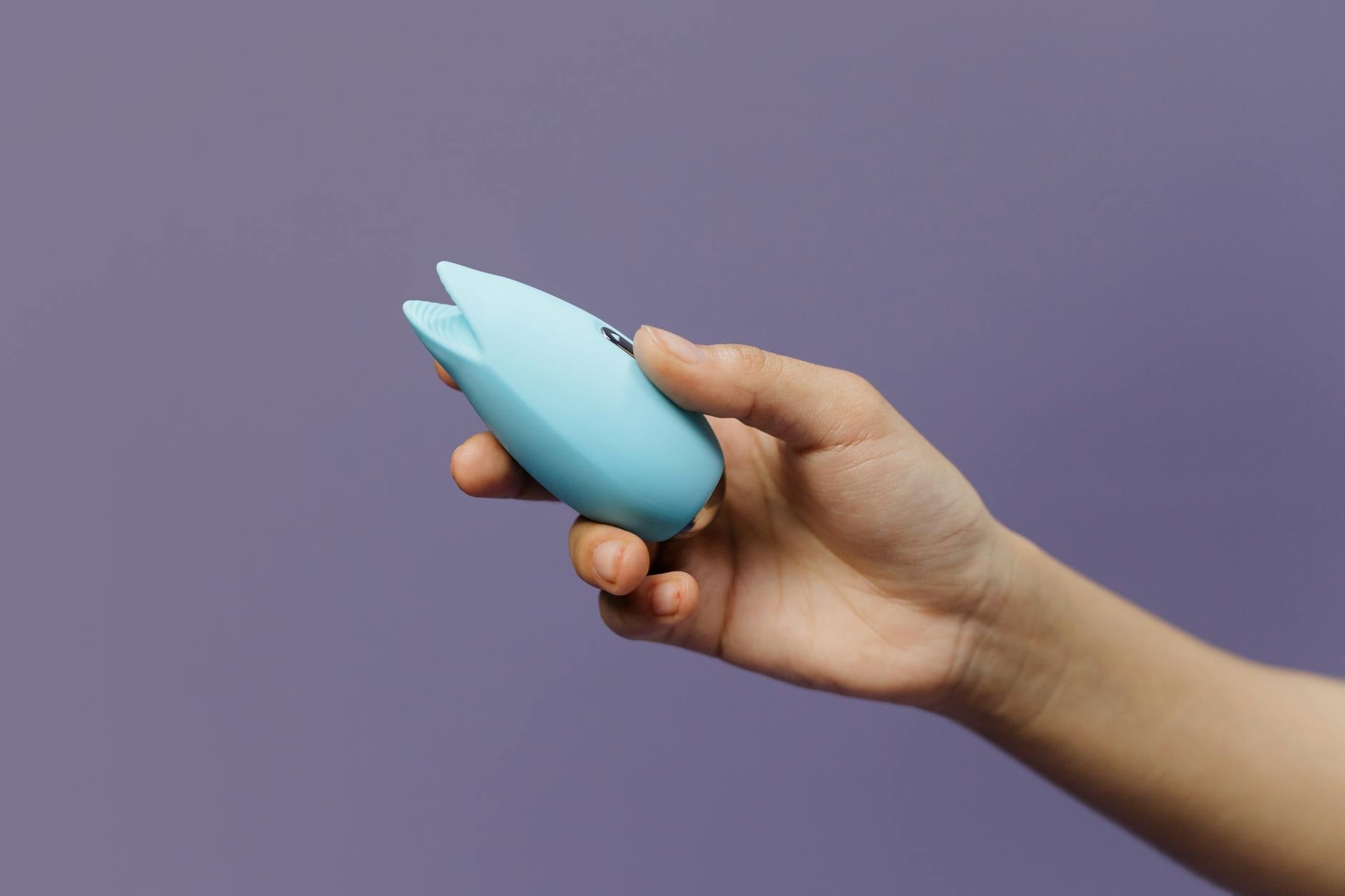
Here's the thing nobody tells you about vibrators
The strongest setting is not the best setting. Not even close. Most conversations around lemon vibrators and clitoral vibrators center on intensity as if it's the finish line, when the truth is gentler sensation can deliver something deeper. The suction patterns on a lemon vibrator at lower levels create a sustained, building kind of pleasure that maxed-out intensity actually bypasses entirely.
If you've been using your lemon clitoral vibrator only at high settings, you're missing an entire world of sensation.
Why low intensity works differently
When you move to gentler settings on a lemon sexual toy, two things happen physiologically. First, the sustained pressure over time actually allows your nervous system to register finer variations in sensation instead of becoming numb to the constant assault. Second, and this matters for pleasure architecture, a slower build maintains arousal on a longer curve instead of spiking you toward orgasm in four minutes flat.
There's also a psychological shift. Lower intensity requires attention. You can't zone out and let the vibrator do the work. You have to stay present, notice what's happening in your body, feel the micro-shifts in sensation. Some people hate this. Many find it's where their best orgasms actually live.
The slow-motion approach
Start at pattern 1 or 2. If your lemon sucker or lem vibrator has multiple rhythms beyond just intensity, pick the gentlest one. Position it exactly where you want it. Do not move. Spend five full minutes at that level before even thinking about adjusting upward.
What you're training here is not your vibrator. You're training your attention. After about three minutes, you'll likely start to notice that the sensation is changing even though the device isn't. That shift is your nervous system waking up to subtler input. That's the win.
Many people discover that they can orgasm from this barely-there sensation, which fundamentally rewires what they think they need.
When low intensity is actually what you need
There are several moments in an intimate life where gentle sensation serves you better than intensity ever could.
If you're trying to stay present with a partner instead of going solo, lower intensity gives you control. You don't disappear into sensation. You can talk. You can notice their attention. You can sync rhythm instead of chasing your own climax independently.
If you're reconnecting with pleasure after numbness or depression, gentle sensation feels less overwhelming. It's easier to access, easier to feel good about, easier to build a relationship with. You're not forcing yourself to respond to maximum stimulus.
If you've been using vibrators for years and notice they feel less effective, dropping the intensity and adding time often resets your response more effectively than cranking to settings 10. Your nervous system has adapted to high input. Low input, extended duration, rewires that adaptation.
If you're anxious about pleasure, about being "too needy" or "taking too long," gentle settings give you permission to linger. There's no rush with a low-intensity pattern. The pace is inherently patient.
The texture of gentler sensation
On the lemon vibrators and lem vibrator line, the suction mechanism at lower settings feels different than the buzz of other clitoral vibrators. Instead of direct vibration, you get rhythmic waves of pressure. At intensity level 1 or 2, this feels almost like a sustained hold with micro-pulses beneath it. It's sensual in a way that high intensity genuinely isn't.
This is also why the shape of your toy matters. A lemon clitoral vibrator is designed to cover more surface area with its suction, so even at the gentlest settings, you're getting broader stimulation instead of a pinpoint buzz. You feel less like you're being stimulated and more like you're being held.
Take your time adjusting the angle. With lower intensity, small shifts matter. Move it a millimeter. Notice what changes. You're not trying to trigger anything. You're exploring what this subtle pressure feels like against different parts of your clitoris.
Combining low intensity with patience
One practice that changes everything: set a timer for 20 minutes and commit to staying below intensity level 3. That's it. No pressure to come. No outcome. Just sustained, gentle sensation for however long it takes your body to respond.
Most people report that after about 10 minutes, the pleasure starts building in a way that feels qualitatively different from high-intensity sessions. It's less a spike and more a wave. Your orgasm, if you have one, tends to feel different too. Deeper. More full-body. Less of a relief and more of a release.
You might also notice that your mind quiets down. Without the aggressive stimulation demanding all your attention, your brain has space to just be present. That mental clarity is part of the physical pleasure. They're inseparable.
Talking about this with partners
If you're using your lemon clitoral vibrator with someone else, let them know you're exploring lower intensity. This matters because partners sometimes interpret using a lower setting as "not into it" or "less aroused" when it's actually the opposite. You're more engaged, not less.
You might also find that your partner's pleasure shifts. If they can see or feel you slowing down, getting quieter, getting more internal, they often match that energy. The whole interaction becomes more connected instead of you disappearing into a device.
If you're exploring this alone, the shift is different but equally valuable. You're giving yourself permission to need less, to move slower, to want gentleness. That's its own kind of intimacy with yourself.
When to move intensity up (and when not to)
Lower intensity isn't forever. You don't need to feel guilty about wanting higher settings sometimes. But the goal is to actually have a choice instead of assuming high is always better.
After a few weeks of practicing low-intensity sessions, most people find their nervous system is more responsive overall. You might notice that higher settings feel more pleasurable now because your baseline sensitivity has reset. Or you might find you never actually want to go higher again. Both are valid.
The sweet spot for many people is patterns 2 through 4 on a lemon sucker. Not maximum. Not barely-there. Right in the middle where you get both sensation and presence.
If you find yourself always reaching for the highest setting and never exploring lower ones, that's worth noticing. It's not a problem. But it might be masking anxiety, or numbness, or a habit pattern you don't actually love. Gentle exploration for a few weeks costs nothing and often reveals something useful.
The solo vs. partnered difference
When you're alone, low intensity gives you freedom. You can take 45 minutes. You can spend 30 minutes at level 2 and never come and still have a completely satisfying experience. There's no clock. There's no person waiting for you to finish.
This is where you discover what you actually enjoy versus what you think you should enjoy. Many people find their preferred intensity drops significantly when there's no external pressure.
With a partner, lower intensity serves different needs. It keeps you present. It extends the time you can spend together without it becoming a production. It gives you both room to talk, to joke, to stay connected instead of disappearing into sensation.
The lemon vibrators work particularly well for this because they're less loud than traditional vibrators. At lower settings, they're barely audible, which means less sensory overwhelm for both of you and more space for other kinds of connection.
The reframing that changes everything
Stop thinking of low intensity as the training wheels version and high intensity as the real thing. Stop thinking of gentle sensation as settling. Your pleasure isn't a hierarchy you're climbing. It's a landscape you're exploring.
Some days you want intensity. Some days you want presence. Some days you want time alone to sink into subtle sensation. Some days you want to move fast with a partner. The ability to access all of it, without shame or pressure, is what actually matters.
The lemon clitoral vibrator at its gentlest setting is not less powerful. It's differently powerful. It teaches you things about your own body that maximum intensity bypasses entirely. That knowledge, once you have it, is yours forever.
People also ask
Can you actually orgasm from low-intensity lemon vibrators? Absolutely. Many people find their most intense orgasms come from extended time at lower intensities. Your nervous system registers sensation more acutely when it's not being overwhelmed, so gentler input sometimes produces deeper response. The key is patience and sustained time, not higher settings.
Will using low-intensity settings make higher settings feel less effective? The opposite usually happens. Taking a break from maximum intensity and training your nervous system to respond to gentler stimulation often resets your overall sensitivity. When you go back to higher settings, they tend to feel more pleasurable because your baseline has shifted. Think of it like turning down the volume on background noise so you can hear the details.
How long should I spend at low intensity before moving up? There's no rule. Some people stay at levels 1-2 for entire sessions and never feel the need to go higher. Others use it as a warm-up and move to intensity 4 or 5 after 10-15 minutes. Follow what feels good in your body, not what you think should happen.
Is low-intensity use different with a partner versus solo? Yes. Solo, you can take unlimited time and fully zone into sensation. With a partner, low intensity serves a different function. It keeps you present and connected instead of disappearing into the device. Both have value. Neither is better.
What if I've always needed high intensity to orgasm? That's fine. You haven't broken yourself. But try an experiment: pick one week and use only levels 1-3. Spend 20-30 minutes minimum per session. Most people find their sensitivity resets within a week or two, and they discover they actually prefer lower settings once their nervous system adapts. The lemon vibrators in particular work well for this because the suction mechanism feels satisfying even at the gentlest levels.
Can low-intensity lemon sexual toys help if I'm numb to sensation? Often yes, but slowly. Start with gentler patterns, add time, and be patient. Numbness usually means your nervous system has adapted to high input or is overwhelmed by other things happening in your body. Sustained, gentle stimulation can help retrain that response. If numbness has been longstanding or comes from medication, check with a healthcare provider too.
The bigger picture
Lower intensity isn't a consolation prize when higher settings don't work. It's an entirely different language of pleasure. Once you learn it, you realize that everything you thought you knew about needing maximum stimulation was actually about permission, presence, and patience.
Your lemon clitoral vibrator is capable of so much more than intensity. Spend some time discovering what that looks like for your body. The answer might surprise you. If you're interested in exploring your baseline needs and preferences further, our contact page has resources and guidance available.
Sources
Phillips, R. L. (2020). "The physiology of pleasure: how nervous system adaptation affects sexual response." Journal of Sexual Medicine, 17(8), 1543-1552.
Talreja, S., & Rosenberg, K. P. (2019). "Low-intensity stimulation and prolonged arousal patterns in sexual response." Sexual Medicine Reviews, 7(2), 203-218.
Brotto, L. A., & Sadownik, R. (2021). "Genital sensation and pleasure during intimate contact." Current Sexual Health Reports, 13(3), 1-10.